

Stem Cells, Tissue Repair and Neurofibromatosis type 1 (StemRepairNF)

Contacts

Responsable, DR Inserm Céline Colnot

Tél.: 01 49 81 39 55
cmYubXJlc25pQHRvbmxvYy5lbmlsZWM=

Responsable délégué, PU-PH Piotr Topilko

cmYubXJlc25pQG9rbGlwb3QucnRvaXA=

News


November 12, 2025:


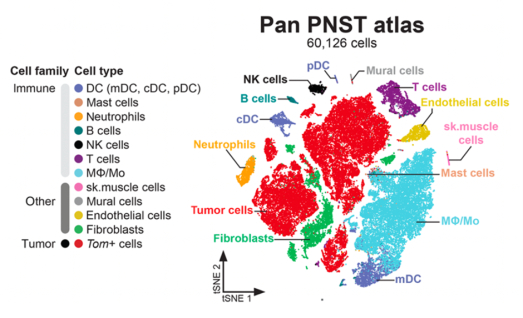
The article “Glial-to-mesenchymal transition of tumor Schwann cells drives the genetic burden in MPNSTs from neurofibromatosis type 1 mouse model” by Radomska KJ, Onfroy A, Lecerf L, Job B, Beaude A, Sesma Sanz L, El Jalkh T, Thieffry D, Charnay P, Wolkenstein P, Ortonne N, Coulpier F, and Topilko P. was published in Science Advances, 2025 Nov 12, Vol 11, Issue 45, DOI: 10.1126/sciadv.adt9210


This work reconstructs the natural history of malignant peripheral nerve sheath tumors, identifies the glial-to-malignant transition as a key driver, and highlights SOX9 as an actionable therapeutic target.


December 16, 2025:


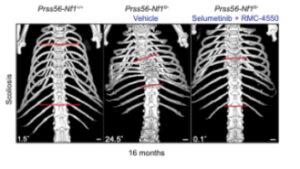
The article “Pharmacological inhibition of RAS pathway alleviates spine deformity in a mouse model of neurofibromatosis type 1” was published in Bone Research, 2025 Dec 16;13(1):103,  by Kovaci F, Goachet C, Perrin S, Slimani L, Coulpier F, Tilotta F, Topilko P, Colnot C. DOI: 10.1038/s41413-025-00492-3


In this article, we investigated spinal deformities in the Prss56-Nf1 KO mouse model of neurofibromatosis type 1 (NF1). This is the first NF1 mouse model that recapitulates spinal deformity, along with other NF1 symptoms, providing a clinically relevant model for developing new therapeutic applications. We showed that treating Nf1-KO mice with RAS-MAPK pathway inhibitors prevented spine deformity, highlighting a promising therapeutic strategy for preventing NF1 spine deformity.


January 29, 2026:


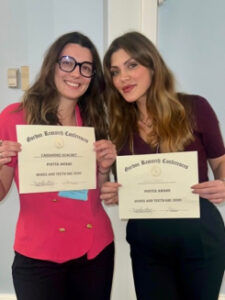
Congratulations to Maria Ethel and Cassandre Goachet for receiving poster prizes at the Bones and Teeth Gordon Conference, Galveston, TX. https://www.grc.org/bones-and-teeth-conference/2026/


Maria Ethel presented her work on “Human and mouse musculoskeletal stromal cell atlases define skeletal stem/progenitor cell identities and spatial origins”, and Cassandre Goachet on “Distinct epigenetic profiles of skeletal stem/progenitor cells dictate their fate during bone regeneration”.



Topic of the team


The research projects in the StemRepairNF team focus on the biology of resident stem cells in the development and regeneration of the musculoskeletal and peripheral nervous systems, and on elucidating their role in Neurofibromatosis type 1 (NF1) disease.


NF1 is a rare genetic disorder affecting 1 in 3,000 people worldwide. It is caused by mutations in the NF1 gene, which encodes neurofibromin, a negative regulator of the RAS signaling pathway. NF1 loss predisposes patients to develop a variety of symptoms, including cutaneous, ocular, neurological, and bone manifestations, and an increased incidence of cancer. The most common symptoms are neurofibromas, benign nerve sheath tumors developing along nerve bundles (plexiform neurofibromas), and skin nerve endings (cutaneous neurofibromas). Plexiform neurofibromas can transform into malignant peripheral nerve sheath tumors, for which there is no effective treatment to date. Among the other most damaging symptoms are bone manifestations such as congenital pseudarthrosis of the tibia, a severe pathology marked by the absence of bone healing after spontaneous fractures in children, and spine deformity such as scoliosis.


The team found that loss of NF1, restricted to the glial-like boundary cap cells, is sufficient to cause both bone and nerve symptoms. In addition to their shared cellular origin, the team aims to identify common mechanisms underlying the development of neurofibromas and bone symptoms to develop shared strategies for their treatment. We also aim to understand how pathological fibrosis in other bone repair disorders shares similar features of NF1-associated fibrosis in congenital pseudarthrosis.


Four research axes:


  • Decipher the mechanisms governing neurofibromas development and their malignant transformation (P. Topilko)
  • Elucidate the mechanisms of NF1 bone manifestations and the biology of boundary cap cells and Schwann cells (C. Colnot and P. Topilko)
  • Understand the heterogeneity and niche architecture of skeletal stem/progenitor cells in bone regeneration (C. Colnot)
  • Identify and validate drugs for the prevention and treatment of neuronal and bone symptoms in NF1 (P. Topilko and C. Colnot)

More about the team

Team funding


Expected outcomes and benefits for the team


The research in the StemRepairNF team focuses on tissue regeneration, stem cell biology in the context of NF1, and musculoskeletal regeneration, with particular emphasis on fundamental research. We also aim to develop a research environment that fosters interactions among fundamental, translational, and clinical research. The research benefits from strong collaboration with clinicians from the Neurofibromatosis Reference Center at IMRB, with orthopaedic surgeons at Necker hospitals, and with the CAP NF patient association. Major efforts will be devoted to translational research, including patient cohort studies in our research program, in combination with our drug screening platform, to identify new compounds and test FDA-approved drugs for the treatment of bone lesions, neurofibromas, and malignant peripheral nerve sheath tumors.


Share

Selected publications

Kovaci F, Goachet C, Perrin S, Slimani L, Coulpier F, Tilotta F, Topilko P, Colnot C. Pharmacological inhibition of RAS pathway alleviates spine deformity in a mouse model of neurofibromatosis type 1.

Bone Research. 2025 Dec 16;13(1):103. DOI: 10.1038/s41413-025-00492-3

Radomska KJ, Onfroy A, Lecerf L, Job B, Beaude A, Sesma Sanz L, El Jalkh T, Thieffry D, Charnay P, Wolkenstein P, Ortonne N, Coulpier F, and Topilko P. Glial-to-mesenchymal transition of tumor Schwann cells drives the genetic burden in MPNSTs from neurofibromatosis type 1 mouse model.

Science Advances, 2025 Nov 12, Vol 11, Issue 45, DOI: 10.1126/sciadv.adt9210

Pulh P, Coulpier F, Onfroy A, Oubrou L, Zhang W, Toledano L, Abou Zougheib E, Fertitta L, Wolkenstein P and Topilko P. Unraveling the Development of Cutaneous Neurofibromas in Neurofibromatosis Type 1.

Acta Neuropathologica Communications, 2025 Jul 19;13(1):158. DOI: 10.1186/s40478-025-02075-z

Espallergues J, Cadiet J, Souab F, Choquet O, Swisser F, Bigeleisen P, Maleysson V, Sola ML, van Hameren G, Tricaud N. Perineural delivery of AAV2/9 in non-human primates is a safe and efficient route for gene therapy in Charcot-Marie-Tooth diseases.

Mol Ther Methods Clin Dev. 2025 Aug 5;33(3):101548. DOI: 10.1016/j.omtm.2025.101548

Perrin S, Ethel M, Bretegnier V, Goachet C, Wotawa CA, Luka M, Coulpier F, Masson C, Ménager M, Colnot C. Single nucleus transcriptomics reveal the differentiation trajectories of periosteal skeletal stem/progenitor cells in bone regeneration.

Elife. 2024 Dec 6;13:RP92519. DOI: 10.7554/eLife.92519

Perrin S, Protic S, Bretegnier V, Laurendeau I, de Lageneste OD, Panara N, Ruckebusch O, Luka M, Masson C, Maillard T, Coulpier F, Pannier S, Wicart P, Hadj-Rabia S, Radomska KJ, Zarhrate M, Ménager M, Vidaud D, Topilko P, Parfait B, Colnot C. MEK-SHP2 inhibition prevents congenital pseudarthrosis of the tibia caused by NF1 loss in Schwann cells and skeletal stem/progenitor cells,

Sci Transl Med. 2024 Jun 26;16(753):eadj1597. DOI: 10.1126/scitranslmed.adj1597 Epub 2024 Jun 26.

Coulpier F, Pulh P, Oubrou L, Naudet J, Fertitta L, Gregoire JM, Bocquet A, Schmitt AM, Wolkenstein P, Radomska KJ, Topilko P. Topical delivery of mitogen-activated protein kinase inhibitor binimetinib prevents the development of cutaneous neurofibromas in neurofibromatosis type 1 mutant mice.

Transl Res. 2023 Nov:261:16-27. DOI: 10.1016/j.trsl.2023.06.003

Gautier B, Hajjar H, Soares S, Berthelot J, Deck M, Abbou S, Campbell G, Ceprian M, Gonzalez S, Fovet CM, Schütza V, Jouvenel A, Rivat C, Zerah M, François V, Le Guiner C, Aubourg P, Fledrich R, Tricaud N. AAV2/9-mediated silencing of PMP22 prevents the development of pathological features in a rat model of Charcot-Marie-Tooth disease 1A.

Nat Commun. 2021 Apr 21;12(1):2356. DOI: 10.1038/s41467-021-22593-3

Topilko P, Charney P, Coulpier F, Gresset A, Radomska K. Non-human model for neurofibromatosis type 1.

Radomska KJ, Coulpier F, Gresset A, Schmitt A, Debbiche A, Lemoine S, Wolkenstein P, Vallat JM, Charnay P, Topilko P. Cellular Origin, Tumor Progression, and Pathogenic Mechanisms of Cutaneous Neurofibromas Revealed by Mice with Nf1 Knockout in Boundary Cap Cells

Cancer Discov. 2019 Jan;9(1):130-147. DOI: 10.1158/2159-8290.CD-18-0156